
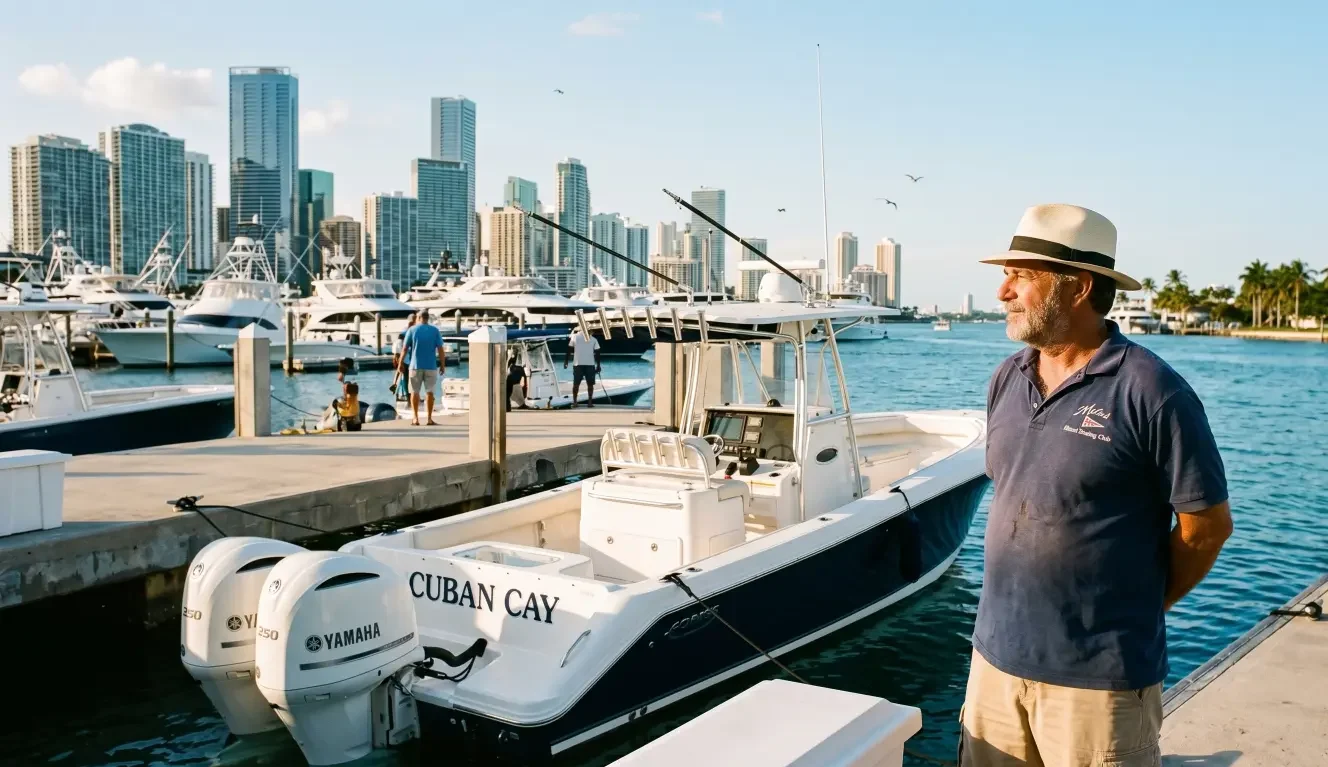
Buying your first boat is exciting. You start thinking about weekends on the water, where you will launch it, where you will store it, and how soon you can actually use it. Then insurance comes up, and many first-time owners make the same reasonable assumption: if you already understand car insurance, boat insurance should work about the same way.
That assumption is where confusion usually starts.
Boat insurance basics are different because the risks are different. A car is driven on roads with traffic laws, lanes, and familiar accident scenarios. A boat operates in a much less controlled environment. Conditions can change quickly. You may be responsible for passengers, dock interactions, trailering, storage, and property damage in places your auto policy was never built to address. Even homeowners coverage, which some owners hope will fill the gap, may only apply in limited ways depending on the boat and the policy.
If you just bought your first boat, this is the point where a little clarity can save a lot of frustration later. The goal is not to memorize policy language. It is to understand where boat insurance differs from auto insurance, what questions to ask, and which situations matter most before your first trip on the water.
Why Boat Insurance Is Different From Car Insurance
The easiest way to understand boat coverage is to stop thinking of it as “car insurance for the lake.”
Cars and boats both involve property damage, liability, and accidents, but that is where the comparison starts to break down. Roads are structured. Water is not. On the road, most people understand what a rear-end collision looks like, what traffic signals mean, and what a standard accident report process may involve. On the water, conditions are less predictable. Visibility, weather, wake, current, docking conditions, and even the experience level of other operators can all affect risk.
That changes the insurance conversation.
A boat can be damaged while moving, while docked, while being loaded, while tied up at a marina, or while sitting in off-season storage. Liability can involve other boats, passengers, swimmers, docks, marina property, or even people helping with loading and unloading. Those are not the kinds of exposures most people picture when they compare a boat to a car.
There is also a lifestyle difference. Many people use a car every day and understand it as a normal part of household life. A boat is often seasonal, recreational, and stored for long periods between uses. That means the risk is not just what happens while you are operating it. Risk also lives in the gaps: when it is parked in a storage yard, sitting in your driveway on a trailer, tied to a dock overnight, or waiting out the off-season.
That is why boat insurance basics deserve their own category. Even when some concepts sound familiar, the situations behind them are not.
The Coverage Basics Every New Boat Owner Should Understand
If you are coming from an auto insurance mindset, it helps to focus on a few broad categories first.
Physical damage coverage is the part many new owners understand most easily. It relates to damage to the boat itself. That may include the hull, motor, and in some cases attached equipment, depending on the policy. This matters not just for a collision on the water, but also for damage that can happen while docking, during severe weather, or while the boat is in storage.
Liability protection is often where new owners underestimate the difference between boating and driving. With a boat, liability may come into play if you damage another boat, hit a dock, cause injury to a passenger, or create a situation that leads to someone else’s loss. For a first-time owner, that is often the biggest mindset shift. The issue is not only “What if my boat gets damaged?” but also “What happens if my boat operation causes harm to someone else?”
Medical payments may also be part of the conversation, depending on the policy structure. For new owners, the key point is not to get lost in terminology. The practical question is whether the policy helps with certain injury-related costs after a covered boating incident and how that differs from broader liability protection.
This is where first-time boat owners benefit from slowing down. Instead of asking, “What is the cheapest way to insure this?” a better early question is, “What situations am I actually exposed to once this boat leaves the driveway?” That framing usually leads to better decisions.
What Boat Insurance Covers That Auto Policies Do Not
Many first-time owners assume their auto policy already handles most of the risk because the boat is transported by a vehicle and feels like another form of transportation. But boat insurance is built around situations that auto insurance generally is not designed to handle.
The biggest example is on-water operation.
If you are navigating open water, moving through a marina, approaching a dock, or carrying passengers on a weekend outing, you are in a risk environment that is completely separate from what your car policy was built to address. A boating incident can involve impact with another vessel, damage to a dock, injury to a guest, or loss that happens during normal water use. Those are boating exposures, not driving exposures.
Passenger liability is another important difference. A first-time owner may think, “They are my friends or family, so it is probably simple.” In reality, transporting passengers creates responsibility. If someone is hurt while boarding, during a sudden maneuver, or because of an incident on the water, that can raise questions that go beyond what many people expect.
Dock and marina incidents are also worth highlighting because they are easy to overlook. A new owner may be focused on the water itself and forget that some of the most stressful moments happen in tight spaces: docking, launching, retrieving, or moving around marina property. A low-speed dock impact may not feel dramatic, but it can still lead to repair costs, property damage, or liability concerns.
This is the contrarian moment many first-time owners need: the main reason to think seriously about boat insurance is not just the image of a major accident in open water. It is the collection of smaller, more realistic situations that happen around ownership itself.
When Homeowners Insurance Might Apply — and When It Doesn’t
A lot of new owners ask the same question once they realize their auto policy is not the whole answer: “But doesn’t my homeowners policy already cover the boat?”
Sometimes there may be limited overlap, especially with certain small watercraft or specific property situations, but that is exactly why assumptions can become risky. Homeowners insurance is designed around the home and household property. A boat may not fit neatly into that framework, especially once size, value, use, storage, or liability enters the picture.
This is where people often confuse “some coverage may exist” with “I am fully covered.” Those are not the same thing.
For example, someone may assume that because the boat is kept at home, homeowners insurance handles damage. Another person may assume that because the boat is small, separate boat coverage is unnecessary. Another may assume the homeowners policy will also address liability while using the boat on the water. Those assumptions may not match how the policy actually applies.
For a first-time owner, the safer mindset is this: homeowners insurance may be relevant in limited ways, but it is not wise to treat it as a substitute for dedicated boat coverage without reviewing the details.
This matters even more if the boat has meaningful value, is financed, is trailered often, is used regularly, or will be stored somewhere other than your property. Once ownership becomes more than a casual assumption, the need for clarity becomes much more important.
If you are comparing boat insurance vs homeowners coverage, the useful question is not “Does homeowners cover boats?” The better question is “Which parts of my boat ownership risk are actually addressed, and which are not?”
How Trailering and Transport Coverage Works
Trailering is one of the easiest places for first-time owners to get confused because it sits between auto risk and boat risk.
You are using your vehicle to tow the boat, so it feels like an auto insurance issue. But the boat itself is still a separate piece of property with its own exposure. That means trailering situations may involve more than one policy depending on what happened and what was damaged.
Imagine a realistic scenario. You are towing your new boat to the lake for the first time. On the way, there is a transport-related incident. Maybe the trailer is involved, the boat is damaged, another vehicle is affected, or property is struck while maneuvering. In a situation like that, the question is not simply, “Do I have insurance?” The question becomes, “Which policy responds to which part of the loss?”
That is why boat insurance for trailered boats deserves specific attention. New owners often focus heavily on what happens once the boat hits the water, but transport risk starts much earlier. Loading, towing, backing down a launch ramp, and retrieving the boat at the end of the day are all moments where things can go wrong quickly.
A common mistake is assuming that because the truck is insured, the entire towing setup is handled automatically. Another is assuming the boat policy only matters once the boat is floating. Real-world ownership is not that neatly divided.
The practical takeaway is simple: if you will trailer the boat, ask specific questions about transport, loading, unloading, and trailer-related incidents. That is much more useful than relying on a general assumption that “it should be covered somehow.”
Storage Risks Most First-Time Owners Don’t Think About
Many new owners imagine the biggest risk is on the water. In reality, some losses happen when the boat is not being used at all.
Storage risk is often overlooked because it feels passive. The boat is parked. Nothing is happening. It seems safe. But off-season and between-trip periods can introduce their own set of problems. Weather damage, theft, vandalism, accidental damage while parked, and issues related to where the boat is stored can all become relevant.
Think about how different storage situations really are. A boat stored in a garage is different from one stored outside on a trailer. A boat left in a marina slip faces different conditions than one parked behind a home. A boat stored through the winter may face a different risk profile than one used year-round. Those differences matter because ownership risk does not disappear just because the season slows down.
This is also where first-time owners sometimes underinsure by thinking in narrow terms. They picture summer use, but not the rest of the year. They think about collision, but not theft. They think about a day at the lake, but not months in storage.
Seasonal ownership makes this especially important. If your boat will spend long stretches parked, ask how the policy treats those periods and what types of damage or loss you should review carefully. Even if the answer depends on the policy, asking the question is a meaningful step toward avoiding surprises later.
Choosing a Deductible for Boat Insurance
Deductibles are familiar to most people because they already deal with them in auto or homeowners insurance. But with a boat, the right deductible choice still deserves a fresh look.
A deductible is not just a number on a page. It shapes how you share risk with the insurer. A lower deductible may feel more comfortable if you are worried about unexpected repair costs after a boating incident. A higher deductible may appeal to owners who want to manage premium costs and are comfortable taking on more out-of-pocket expense if something happens.
The mistake is choosing a deductible the same way you chose it for your car without considering how you use the boat.
For example, a first-time owner who trailers often, stores the boat outside, and uses it regularly on busy weekends may think differently about deductible selection than someone who stores the boat securely and uses it only a few times each season. Neither choice is automatically right. The decision should reflect real ownership habits, not just what felt familiar in auto coverage.
This is also a good place to pause and think about repair reality. Even a relatively minor boating incident can feel expensive when damage involves specialized parts, fiberglass work, marina-related damage, or transport complications. That does not mean you need the lowest deductible available. It does mean the number should feel manageable in a real-world scenario.
If you are comparing boat insurance deductible selection options, the most useful approach is to ask: “If something happened during storage, docking, transport, or normal use, what amount could I comfortably handle without turning the claim into a financial shock?”
That question usually leads to a better answer than simply copying your auto deductible.
Owning a boat introduces risks that standard policies may not fully cover.
If you recently purchased a boat—or are planning to—reviewing your coverage can help ensure there are no gaps before your next trip on the water.
A local agent can walk through the details and help you explore boat insurance options that fit your situation.
Request a free quote or speak with a member of the Miles Jackson Insurance team to get started.
Common Mistakes New Boat Owners Make With Insurance
Most early insurance mistakes do not come from carelessness. They come from familiarity. People assume the rules will be close enough to what they already know from cars and homes, and they move forward without asking deeper questions.
One common mistake is assuming homeowners coverage is enough. Even when some limited protection may exist in certain situations, that should not be treated as a complete boat insurance strategy.
Another frequent mistake is forgetting about trailering. New owners may think about the fun part of ownership—the lake, the river, the marina—but transport is part of boat ownership too. If you tow your boat, load it, unload it, or store it on a trailer, that part of the risk deserves direct attention.
A third mistake is ignoring storage because it feels uneventful. Boats are often unused for long periods, and that can create a false sense of security. But theft, weather, accidental damage, and storage-related issues can matter just as much as what happens during a day on the water.
There is also a mindset mistake that shows up often: buying coverage based only on the purchase moment rather than the ownership pattern. The first insurance conversation may happen quickly because financing, registration, or logistics are already in motion. But once the boat is actually part of your routine, the real questions become clearer. Where will you keep it? How often will you tow it? Will guests be on board often? Will it stay in a marina at times? Those practical details matter more than many first-time owners realize.
How to Confirm You Have the Right Boat Coverage
The best next step is not trying to decode every line of policy language alone. It is knowing what to review and what to ask.
Start with your ownership reality. Where will the boat be stored? How often will it be trailered? Will it mostly stay at home, at a marina, or in seasonal storage? How often will you have passengers? Those questions make the coverage conversation much more useful.
Then review the policy through that lens. You do not need to become an insurance expert. You just need to make sure the situations most likely to happen in your life are actually part of the discussion.
A practical coverage review should include questions like these:
- What does the policy address while the boat is on the water?
- What happens during transport or while trailering?
- How is storage handled?
- How does liability apply if someone is injured or property is damaged?
- How do deductibles work across different types of losses?
This is also where local guidance can be helpful. A nearby agency can talk through real ownership situations rather than treating the boat like just another item on a checklist. That matters for first-time owners because you often do not know which questions are most important until someone helps frame them clearly.
The goal is not perfect certainty. The goal is fewer bad assumptions.
If you have recently purchased a boat, now is the right time to review your coverage before the first launch, not after a problem exposes a gap you did not know existed. Boat insurance basics are most useful when they help you connect coverage to real ownership decisions: on the water, on the trailer, at the dock, and in storage.
When that connection is clear, you are in a much better position to enjoy the boat for what you bought it for in the first place.
FAQ Content
What does boat insurance typically cover?
Boat insurance typically focuses on risks tied to owning and using a boat, such as damage to the boat itself, liability for certain accidents, and situations involving storage, docking, or transport. Exact coverage depends on the policy, but boat insurance is generally designed for exposures that auto insurance does not address.
Do I need boat insurance if my boat is small?
A small boat may still create liability and property risk, so it is worth reviewing rather than assuming no separate coverage is needed. Some owners believe small boats are automatically covered elsewhere, but that may not fully reflect how the policy applies in real use.
Does homeowners insurance cover boats?
Some homeowners policies may provide limited coverage for small boats or certain property-related situations, but that should not be treated as a full replacement for boat insurance without reviewing the details. The most important question is which risks are covered and which are not.
Does boat insurance cover trailering accidents?
Depending on the situation, both auto and boat policies may play a role. That is why first-time owners should ask specifically about towing, loading, unloading, and transport-related damage instead of assuming one policy handles everything.
How do boat insurance deductibles work?
Deductible structures can vary by policy and coverage type. In practical terms, the deductible is the amount you may need to pay before covered insurance benefits apply, so it is important to choose a level that fits your comfort with risk and out-of-pocket cost.
Do lenders require boat insurance for financed boats?
In some cases, insurance may come up as part of a financing arrangement, but requirements can vary. If your boat is financed, it is a good idea to confirm what coverage expectations exist before finalizing the policy decision.
Request a Boat Insurance Quote
Owning a boat introduces risks that standard policies may not fully cover.
If you recently purchased a boat—or are planning to—reviewing your coverage can help ensure there are no gaps before your next trip on the water.
A local agent can walk through the details and help you explore boat insurance options that fit your situation.
Request a free quote or speak with a member of the Miles Jackson Insurance team to get started.
RELATED LINK: