
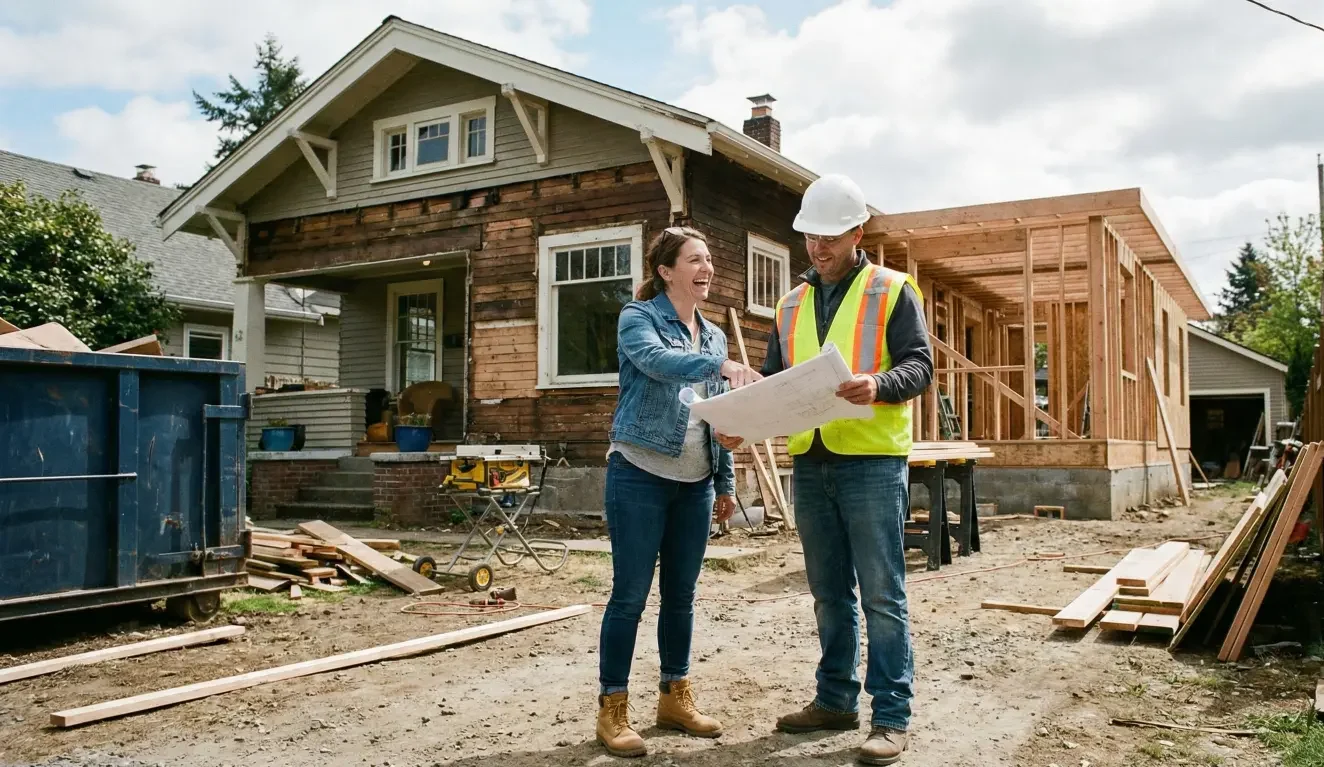
Homeowners insurance after renovation
When a remodel is about to start, most homeowners focus on permits, contractors, and materials—not insurance. That makes sense. Insurance feels like paperwork, and renovations feel like real life.
But renovations can quietly change your home’s “replacement cost story,” your liability exposure, and what you own inside the home. If your policy doesn’t reflect those changes, you can end up underinsured after upgrades—especially if you finish a kitchen, add living space in a basement, or expand square footage.
This guide gives you a practical checklist and timeline. The goal isn’t to overcomplicate your project. It’s to help you update the right things at the right time—before the dust (and the invoices) hit.
The hidden risk: your remodel changes the “replacement cost story” of your home
Most homeowners think of insurance as a set-it-and-forget-it product: you buy coverage when you buy the house, and you review it when you renew.
Renovations break that assumption.
Even if you don’t change the footprint of your home, a major remodel can change what it would cost to rebuild after a serious loss. High-end cabinets, custom tilework, upgraded electrical, built-ins, premium flooring—those upgrades often raise rebuild costs. Policies don’t automatically “learn” that you made improvements.
There’s also a second layer of risk during the project itself:
- Your home may be partially open or less secure at times.
- Materials may be stored on-site.
- Contractors and subcontractors will be coming and going.
- Parts of your home may be unlivable temporarily.
None of this means “your policy won’t cover you.” It means it’s smart to treat renovation as a moment for a coverage check, so your policy matches your real home—both during the project and once it’s finished.
Start here: the renovation insurance review checklist (10 minutes)
If you only do one thing from this article, do this checklist before work begins. You can complete it in about 10 minutes, and it will tell you whether you should call your agent for a quick review.
- Write down the renovation scope in one sentence
Example: “Kitchen remodel with new cabinets, counters, appliances, and updated electrical,” or “Finished basement adding a bedroom and bath.” - List what’s changing (pick all that apply)
- Square footage or finished living space
- Plumbing or electrical work
- HVAC replacement or expansion
- Custom finishes (tile, stone, built-ins)
- High-end appliances or fixtures
- New features that change risk (example: deck, wood stove, hot tub)
- Gather basic documentation (don’t overdo it)
- Contractor agreement or proposal
- Rough budget range
- Timeline (start date and expected end date)
- Photos of the current space (before demo)
- Pull your current policy declarations page
You’re not trying to “understand everything.” You just want to know what coverage types and limits you currently have. - Ask two simple questions
- “If the worst happened next month, would my policy reflect what I’m building?”
- “Do I need to notify my insurer before I start?”
If you feel uncertain about either question, that’s your signal to schedule a review. It’s easier to address coverage questions now than during a claim.
What renovations commonly trigger a homeowners insurance review
Not every project needs an insurance conversation. Painting a room or replacing a faucet usually doesn’t change the story.
But these renovation types commonly trigger a review because they change rebuild costs, living space, or risk profile.
Kitchen remodels (cabinets, counters, high-end appliances)
Kitchens are one of the most expensive areas to rebuild. Even without changing square footage, a kitchen remodel can significantly change what your home contains and what it would cost to restore.
A review is especially worth it if your project includes:
- Custom cabinets or built-ins
- Stone counters or specialty materials
- Premium appliances
- Electrical upgrades (panels, wiring, lighting plans)
Finished basements (new living space, flooring, plumbing, electrical)
Finishing a basement often adds meaningful usable living space. It also commonly involves electrical, plumbing, and sometimes egress requirements.
A finished basement is also easy to “forget” to report because it doesn’t always change the exterior footprint of the home—yet it can change rebuilding cost and how your home is described.
Additions and structural changes (square footage, roofline, load-bearing changes)
If you’re adding square footage—an addition, a bump-out, converting a garage, changing rooflines—an insurance review is almost always a good idea. Structural changes can affect rebuilding cost assumptions and coverage needs.
Major systems upgrades (HVAC, electrical panel, plumbing)
Even if you aren’t making the home “bigger,” system upgrades can raise rebuild costs and affect how restoration would happen after a serious loss. It’s also helpful to keep these upgrades documented.
High-value items added (built-ins, specialty materials)
Some upgrades are less about square footage and more about value concentration: custom millwork, imported tile, specialty flooring, built-in sound systems, designer fixtures, or other high-cost finishes.
These changes can be worth reviewing because they change what’s in the home and what it would cost to replace after major damage.
The timeline: what to review before, during, and after construction
Renovation insurance questions are easier when you treat them like the renovation itself: a sequence.
Before: coverage check + carrier notification (if needed)
Before demo starts, aim to confirm three things:
- Your dwelling coverage still makes sense for the “after” home
You don’t need to calculate anything yourself. You just want your insurer/agent to understand what’s changing so coverage can be reviewed appropriately. - Whether your insurer needs to be notified about the project
Notification expectations can vary by policy and project scope. If you’re doing a major renovation—especially anything structural or anything that changes occupancy—ask what your insurer wants documented. - What documentation will be helpful
In general, it’s smart to keep:
- Contractor agreements and change orders
- A rough budget
- Before photos (and a few during photos)
- Invoices/receipts for major materials and finishes
- Permits (if applicable)
This isn’t about creating a binder. It’s about having proof of what changed if questions come up later.
During: “jobsite realities” (materials, access, vacancy/occupancy changes)
During construction, your home is a different kind of environment than normal living.
A few realities that can affect insurance conversations:
- Materials may be stored on-site and can be damaged or stolen.
- Areas of the home may be open or temporarily unsecured.
- More people will have access to the property.
- In some projects, you may live elsewhere temporarily.
Coverage details around materials, theft, or damage during construction can be situational and policy-dependent. The safest approach is to ask your agent early, before you assume what is or isn’t covered.
Two practical steps during the project:
- Take a quick photo record occasionally (especially before walls close up).
- Track major purchases and deliveries (what it is, where it’s stored, and when it arrived).
After: final documentation + confirm updated coverage reflects completed work
Once the remodel is complete, do a short “closeout” update:
- Save the final contract, invoices, and any permits/inspections.
- Take after photos.
- Confirm your policy reflects the completed home (not the “before” version).
If your renovation meaningfully changed finishes, living space, or systems, this is the moment to ensure your coverage is aligned with reality.
The misconception that causes underinsurance (and why it’s so common)
The most common misconception is simple:
“My home is insured, so improvements are automatically included.”
It’s common because it feels logical. You didn’t buy a “kitchen policy” or a “basement policy.” You bought homeowners insurance.
But your policy reflects what’s on file—your home’s characteristics, descriptions, and the coverage limits you selected—unless those details are reviewed and updated. Renovations can outgrow the assumptions that were true when your policy was set up.
The fix isn’t panic or overbuying coverage. It’s a calm review at the right moments:
- Before a major renovation begins
- After the project is complete
- Anytime you make a change that materially affects rebuild cost or risk
Common missed items that matter more than people think
Most homeowners remember the big obvious change—like “we added a bathroom” or “we installed new cabinets.”
The missed items are usually the ones that quietly create gaps.
Increased dwelling coverage needs after upgrades
Dwelling coverage is often the biggest lever affected by renovations. If you’ve made significant upgrades, it’s worth confirming your coverage still matches the home you’ve created.
You don’t need to guess the perfect number. You do need to flag that the home has changed.
Other structures changes (detached garage, shed improvements)
Detached garages, sheds, and other structures can be improved during a renovation project without getting much attention. If you build or significantly upgrade a detached structure, it’s worth mentioning.
Personal property changes (new furniture/equipment)
Renovations often come with “new stuff”: furniture, electronics, tools, décor, gym equipment, or even a home office buildout. Your personal property coverage may still be fine—but you should recognize that the contents of your home may be worth more than they were before.
If you’re making major purchases, it’s a good moment to do a quick inventory update (even a simple spreadsheet or photos).
Liability exposure (pools, trampolines, dogs, more visitors/contractors)
Not every renovation affects liability. But some upgrades can change the liability conversation—especially if you add features that change how people use your property.
Also, during the project itself, your property may have more foot traffic and more activity. The goal here isn’t to alarm you. It’s to recognize that renovation can change your risk environment temporarily.
If you’re adding major features (for example, certain outdoor structures or amenities), ask whether your agent wants to review anything related to liability.
Loss of use / living expenses if the home becomes temporarily uninhabitable
Some renovations create temporary unlivable conditions. Others don’t—until something goes wrong. A fire, a water loss, or a major damage event during renovation can complicate where you live and for how long.
Loss of use coverage can be complex and policy-specific, but it’s worth knowing what your policy generally provides before you begin a major project—especially if your renovation plan already involves alternative housing for a period of time.
How to “proof-check” your coverage without getting lost in jargon
You don’t need to become an insurance expert to do a smart renovation review. Proof-checking is about asking for the right documents and asking plain-English questions.
What to request
Ask your agent for:
- A current coverage summary or your declarations page (if you don’t have it handy)
- A side-by-side view of any recommended updates (so you can see what changed)
- A high-level explanation of assumptions behind dwelling coverage (you’re not looking for a technical report—just clarity)
If you’re mid-project, you can also ask whether any endorsements or special considerations apply to your situation. Don’t worry about naming them; just describe your renovation.
What to keep
Keep a simple renovation file (digital is fine) with:
- Contractor agreements and change orders
- Permits (if applicable)
- Invoices and receipts for major purchases
- Photos: before, during key stages, and after
If you ever need to explain what changed and when, this file will make it easier.
What questions to ask your agent (plain English)
Use questions like these:
- “Does my policy need to be updated based on this renovation scope?”
- “Is there anything you need from me before construction begins?”
- “Do my dwelling and other structures coverages still match the home I’m building?”
- “If I’m storing materials at the house, is there anything I should know or document?”
- “Once the project is done, what should I send you so the policy reflects the final work?”
These questions keep the conversation grounded in your real project instead of abstract insurance terms.
The low-friction next step: schedule a renovation insurance review
Starting a major renovation? It’s a good time to make sure your homeowners coverage still matches your home.
We can review what’s changing, what to document, and whether anything should be updated before work begins.
Share the basics of your project (kitchen, basement, addition), and we’ll help you sanity-check coverage—no pressure.
FAQ content
1) Do I need to update homeowners insurance after a remodel?
Often, yes—especially if your remodel significantly changes rebuild cost, finished living space, or major systems. Not every project requires a policy change, but a quick review is a smart way to avoid being underinsured after upgrades. The safest approach is to describe your project scope to your agent and confirm whether updates are needed.
2) How do renovations affect dwelling coverage?
Renovations can raise what it would cost to rebuild your home after a serious loss, particularly with high-end finishes, structural changes, and major system upgrades. If your dwelling coverage doesn’t reflect the updated home, you may be underinsured. A review helps ensure your coverage matches what you’ve actually built.
3) When should I tell my insurance company about a renovation?
Ideally before major work begins—especially for structural changes, additions, finished basements, or projects that change how the home is occupied during construction. Notification expectations can vary by policy and project scope, so it’s best to ask early rather than assume.
4) Does adding a finished basement trigger an insurance review?
It can. A finished basement often adds meaningful living space and may involve electrical, plumbing, and other upgrades. Those changes can affect rebuild cost and how your home is described. A quick review helps confirm your policy reflects the finished space.
5) Should I update my policy after a kitchen remodel?
If your kitchen remodel includes high-value upgrades (custom cabinets, premium counters, major electrical changes, built-ins, or high-end appliances), it’s worth reviewing your coverage. Kitchens can be expensive to rebuild, and your policy may need to reflect the updated finishes and costs.
6) What’s a practical home renovation insurance checklist?
A practical checklist includes: summarizing the project scope, listing what’s changing (space, systems, finishes), collecting basic documentation (contract, budget range, timeline, photos), reviewing your declarations page, and asking your agent whether updates or notifications are needed before construction starts.
Schedule a renovation insurance review (quick coverage check before construction starts)
Request a homeowners quote update (post-renovation, updated dwelling coverage)
Starting a major renovation? It’s a good time to make sure your homeowners coverage still matches your home.
We can review what’s changing, what to document, and whether anything should be updated before work begins.
Share the basics of your project (kitchen, basement, addition), and we’ll help you sanity-check coverage—no pressure.
RELATED LINKS:
National Association of Insurance Commissioners — Homeowners Insurance