
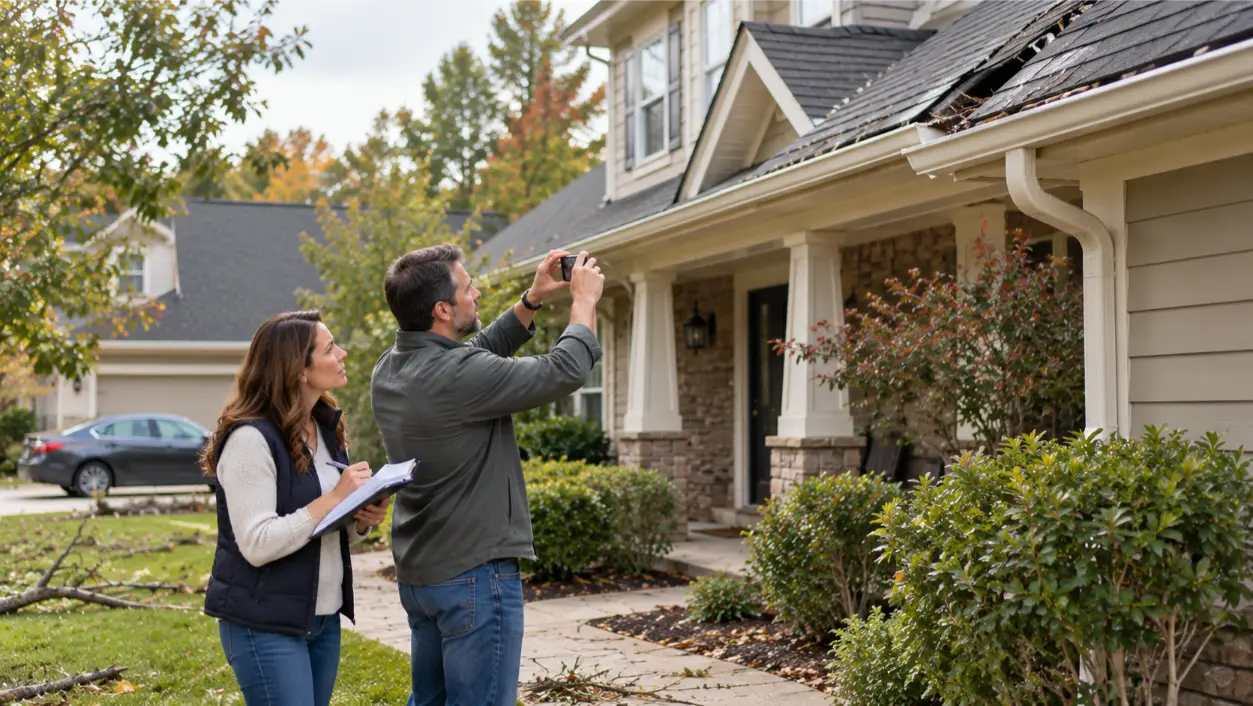
Knowing how to document storm damage for insurance can make the first days after wind or hail damage more manageable.
A missing shingle, dented gutter, broken window, or new ceiling stain may signal damage that needs attention. Before cleanup, record what happened, what is safely visible, and the steps taken to prevent additional harm. Documentation helps an insurer investigate; it does not guarantee coverage or payment.
For homeowners in Newnan, Peachtree City, Sharpsburg, Senoia, and nearby Georgia communities, the following nine steps cover safe photographs, prompt reporting, contractor estimates, and communication with the adjuster. Miles Jackson Insurance offers homeowners insurance guidance through its local GEICO exclusive agency; the actual claims process and coverage are determined by the policy and the responsible insurer.
First, Make Sure the Property Is Safe to Approach
Wait until the immediate weather threat has passed. Do not climb onto a damaged roof, enter a visibly unstable structure, touch fallen electrical wires, or walk beneath loose limbs. Use photographs from the ground or a safe interior location. If there may be gas leakage or significant structural instability, move away and contact the appropriate emergency or utility service. The National Weather Service’s post-thunderstorm guidance emphasizes staying out of damaged buildings and reporting downed power lines.
Safety comes before photographic completeness. An insurer can arrange an inspection, and qualified professionals can document roof areas that are not safely visible from the ground.
9 Steps to Document Wind, Hail, and Storm Damage
1. Record the Storm Date and a Short Event Timeline
Write down the date and approximate time of the storm, the address, when you first noticed damage, and whether heavy wind, hail, fallen branches, or water entry were involved. Preserve weather alerts or a short note about what you observed, but do not state that hail or wind caused a particular defect unless the evidence supports it. Record when a leak started and whether it changed after later rain. Keep the timeline factual rather than guessing about the cause.
2. Take Wide, Medium, and Close-Up Photos
Start with a photo showing the whole side of the house and where the damage sits. Then take a medium view of the affected roof edge, siding wall, gutter, window, or other feature. Finish with a close-up showing the visible condition. Use safe angles, retain original files, and avoid filters that obscure the scene.
For a storm damage insurance claim photos checklist, do not move dangerous debris for a photo. Short videos can capture leaks and relationships between affected areas.
3. Check More Than the Roof
Wind and hail may affect siding, fascia, soffits, gutters, window screens, shutters, fences, sheds, decks, and outdoor fixtures. Take separate photos of each visibly damaged area and note any impact or debris patterns. Inside, photograph fresh water marks, damaged drywall, wet flooring, and affected belongings. Distinguish new conditions from existing wear when possible.
Photograph suspected hail impacts safely; determining whether roof marks came from hail, age, or another cause may require professional assessment.
4. Make a Written Inventory of Damaged Belongings
For each affected item, note its description, approximate purchase date if known, condition, apparent damage, and estimated replacement or repair cost. Keep purchase receipts, photographs taken before the storm, order confirmations, and relevant serial-number records where available. Do not invent amounts if you are unsure. The National Association of Insurance Commissioners recommends photos, videos, lists, and saved damaged items when possible so the insurer has a record to review.
5. Contact the Insurer or Agent Promptly
Do not wait until you have gathered every contractor estimate. Georgia’s Office of the Commissioner of Insurance and Safety Fire advises reporting a claim as soon as possible, noting that policies may set notification requirements. Ask the company or agent where to file, which insurer administers the policy, what information is needed, and how to upload evidence securely. Record the claim number, date of notice, representative’s name, and next promised contact.
There is no single reporting deadline that should be assumed for every Georgia homeowners policy. Review your contract’s notice provisions and any deadlines communicated in writing for your loss.
6. Prevent Additional Damage Without Erasing Evidence
Once the initial condition is photographed and it is safe to act, arrange reasonable temporary protection. This may mean professional roof tarping, boarding a broken window, or addressing an active interior water leak. Keep invoices, receipts, dates, and before-and-after photographs. A qualified contractor should handle dangerous roof or electrical work. Georgia OCI advises homeowners to make temporary protective repairs while avoiding permanent repairs before inspection when possible; payment for those expenses remains subject to policy terms.
If urgent action is needed for safety, do not delay for photographs. Explain what was done and retain safe documentation.
7. Keep a Claim Communication Log
Create one folder for your policy declarations, photos, video files, inventory, receipts, estimates, adjuster correspondence, and completed forms. After each call, note the date, name, contact details, questions asked, and instructions received. Save written responses. This helps when representatives change or inspections continue.
8. Prepare for the Adjuster’s Inspection
Be ready to show all known damage, including interior leaks and detached structures, without concealing preexisting conditions. Share the photo timeline, invoices for emergency protection, and any available maintenance or prior-repair records. Ask whether the company needs you to preserve damaged materials and when to expect the next decision. You can request an explanation of the estimate’s line items, any depreciation, the applicable deductible, and whether supplemental documentation may be considered if concealed damage later becomes apparent.
9. Review the Written Decision Before Authorizing Major Work
A repair estimate, insurer inspection, and claim settlement are different documents. Compare the insurer’s written scope with the damage documented and the contractor’s proposed scope. Ask for clarification about excluded items, the deductible, replacement-cost versus actual-cash-value treatment, and any conditions for additional payments. The Georgia OCI recommends requesting an itemized explanation and written reasons for disputed denials.
Do not rush into a final settlement merely because a contractor is available today. If a disagreement remains, follow the insurer’s review process and consider the state consumer-assistance options.
What to Photograph After Wind Damage to a Roof
If you are asking what to do after wind damage to roof materials, begin at ground level. Photograph missing or lifted-looking shingles visible from below, damaged ridge or eave edges, loosened gutters, fallen branches, and debris in the yard. Take images of the house elevation so the location can be identified. If there is a ceiling stain, show the entire ceiling area, the stain itself, and any active dripping. Avoid removing roof materials to expose a condition for a photograph.
For suspected hail damage, include safe views of visibly dented gutters, downspouts, screens, or outdoor metal surfaces and note when the marks were discovered. Those observations may support a request for inspection but are not conclusive proof of roof damage. Ask a qualified roofing professional to assess the roof if warranted.
How Soon Should You File a Storm Damage Claim?
A useful insurance claim documentation timeline begins the day it is safe to assess the loss: make the initial record, tell your insurer promptly, and preserve communications as the claim proceeds. The policy may include notice and proof-of-loss obligations. Catastrophe-related procedures can differ from an ordinary claim, so ask which dates and forms apply to your situation instead of relying on a generic number of days from an internet checklist.
Continue updating your record if new signs appear, such as water staining after subsequent rain. Tell the insurer when an additional condition is discovered rather than silently adding it to an older estimate.
Should You Get a Repair Estimate Before Filing the Claim?
Usually, you do not need to delay initial notice while seeking a bid. Getting a written contractor estimate can help you understand the scope, but it is not the same as the insurer’s coverage determination. The Georgia insurance regulator recommends understanding repair costs before meeting the adjuster if possible. An estimate may help but should not delay timely notice.
Ask contractors to separate emergency mitigation from permanent work and itemize materials and labor. If a contractor finds additional damage, request photographs and a written explanation. Coordinate proposed changes with the insurer before irreversible work where possible. The insurer, not the contractor, determines coverage.
Wind, Hail, Water Entry, and Flooding Are Not the Same Coverage Question
Georgia OCI explains that standard homeowners insurance commonly addresses certain wind and storm damage, while flooding is generally excluded and may require separate flood insurance. Rain entering through a storm-damaged roof, groundwater rising into a home, and water backing up through a drain can involve different provisions. Do not describe every wet interior surface as a covered wind loss, and do not presume all storm-related water is excluded. Ask the insurer which cause-of-loss and deductible provisions apply.
Some policies use a special wind or hurricane deductible, and payment may depend on exclusions, limits, and whether repairs are valued on an actual-cash-value or replacement-cost basis. The Georgia OCI severe-weather guidance explains these coverage distinctions. The policy, endorsements, and claim findings control the actual result.
Contractor Red Flags After a Storm
Storm recovery attracts legitimate repair crews and opportunistic solicitors. Be careful if someone promises guaranteed insurance approval, insists you sign immediately, claims an adjuster has already authorized everything without documentation, or requests your entire insurance check upfront. Ask for identity, applicable credentials, proof of insurance, a written scope, and clear payment terms. The Federal Trade Commission cautions against blank contracts and high-pressure post-disaster repair offers.
Do not allow a contractor to dictate what you should report as damaged or to inflate an estimate. Review any document that assigns claim rights or authorizes a representative before signing. If you are uncertain about the legal effect, obtain qualified advice.
Quick Storm Claim Documentation Checklist
- Confirm that the structure and surrounding area are safe to approach; never climb a damaged roof.
- Record the storm date, approximate time, address, and when each problem was discovered.
- Take original wide, medium, and close-up photos of each affected area.
- Capture safe photos of gutters, siding, windows, detached structures, and interior water marks.
- List damaged belongings and preserve receipts or older photographs when available.
- Notify the insurer or agent promptly and record the claim number and contact details.
- Document temporary protective work and keep invoices before and after the work.
- Save adjuster reports, repair estimates, policy correspondence, and dates of every conversation.
- Review exclusions, deductibles, valuation terms, and any claim decision in writing.
Frequently Asked Questions
Can I file a storm claim without photos taken during the storm?
Yes, you can report a loss based on damage discovered afterward. Photograph the condition as soon as it is safe, record when you noticed it, and describe what you actually know. The insurer may need additional inspection or records.
Should I climb onto the roof to prove hail damage?
No. Roof falls and unstable materials are serious hazards. Document safe ground-level observations and ask a qualified professional or insurer’s inspector to review inaccessible areas.
Will insurance pay for a temporary tarp or emergency repair?
Reasonable temporary mitigation may be reimbursable when it relates to a covered loss and meets policy conditions. Keep receipts and ask the insurer about authorization and documentation.
Do I need a contractor estimate before I file?
Not necessarily. Notify the insurer promptly and ask what it requires. An itemized bid can be helpful later, but waiting for one should not cause you to miss a notice obligation.
Does a homeowners policy cover all hail, wind, and rain damage?
No policy should be assumed to cover every event. Wind or hail damage may be covered under applicable terms, but exclusions, deductibles, age-related conditions, and the distinction between rain entry and flooding matter.
What if I disagree with the adjuster’s estimate or claim denial?
Ask for the itemized decision and specific policy language, supply additional relevant evidence, and use the insurer’s dispute process. For an unresolved Georgia complaint, the Georgia OCI Consumer Services Division may help.
Keep Your Records Organized and Ask for Local Guidance
When storm damage is visible, documenting it safely and promptly is more useful than guessing what the insurer will pay. Miles Jackson Insurance serves homeowners in Newnan, Peachtree City, Sharpsburg, and nearby communities through its local GEICO exclusive agency. Review its homeowners coverage information or contact the Newnan team for guidance on policy questions and the appropriate claims contact. For new or updated coverage, the agency also offers a free quote request. Claims are investigated and decided by the applicable insurer, subject to the policy terms.
Insurance, safety, and legal disclaimer: This article offers general educational information, not an insurance coverage determination, claims adjustment, engineering or roofing assessment, emergency instruction, or legal advice. Requirements, claim deadlines, deductibles, exclusions, insurer procedures, and potential payments vary by policy and circumstances. Georgia guidance should not automatically be applied to Alabama policies. Follow emergency-authority instructions, use qualified professionals for hazardous repairs, and confirm claim requirements directly with the insurer.
RELATED LINK: Georgia Office of the Commissioner of Insurance and Safety Fire — Insurance Claim Tips