
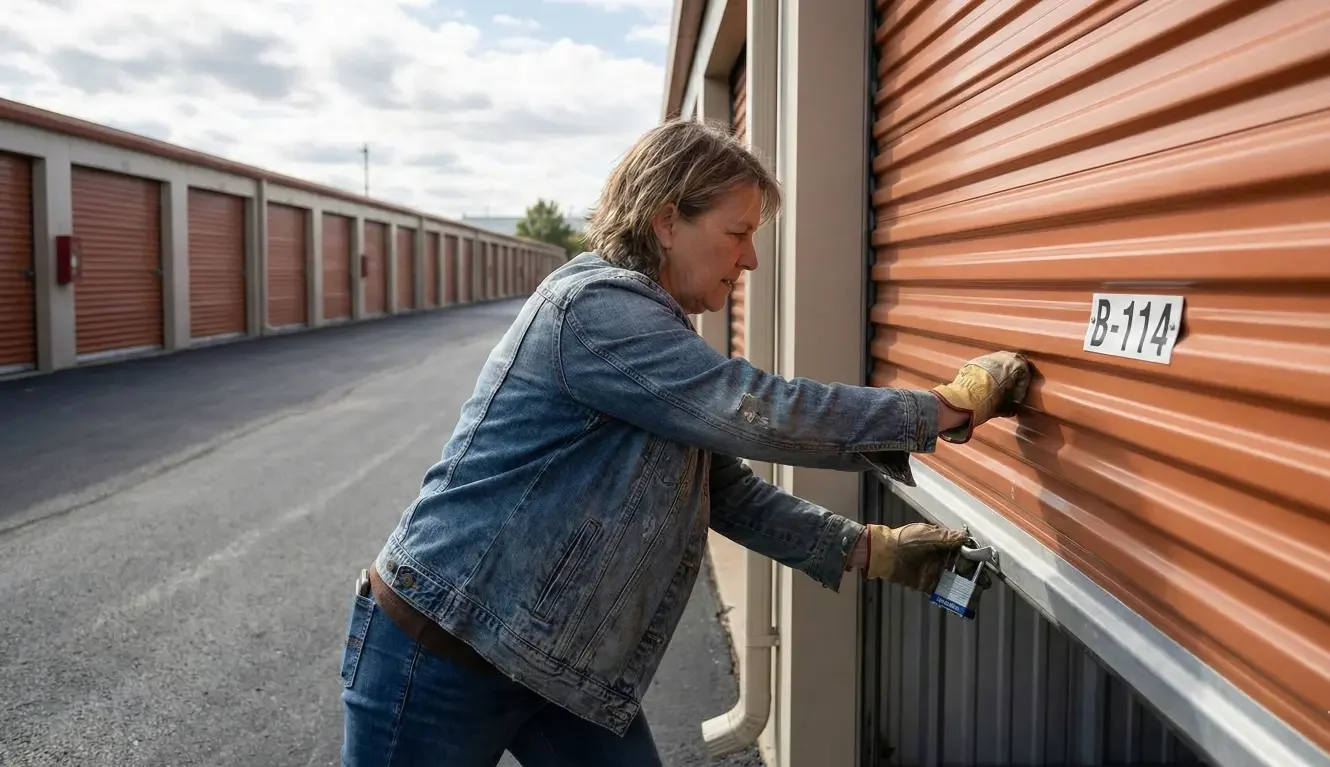
Moves are chaotic—half your life is in boxes, some of it is in a storage unit, and for a day it might even be on a moving truck. That’s exactly when people start asking, “Wait… does my renters insurance cover any of this?”
The honest answer is: it can—but the details matter. Many renters policies include some coverage for belongings away from your apartment, but the amount may be limited, certain categories may have special caps, and your claim can turn into a documentation problem if you can’t prove what you owned.
This guide walks you through renters insurance for storage units: off-premises coverage in plain English, the most common limit surprises, and a quick checklist to protect yourself before you lock the unit and drive away.
The moving-month risk nobody plans for: your stuff is everywhere, not “at home”
Renters insurance is designed around a simple idea: your personal property is covered up to a limit, and your policy is tied to your address.
Moving month breaks that neat picture.
For a few weeks, your belongings might be split across:
- Your current apartment (still occupied, partly packed)
- A storage unit (out of sight and accessed by a gate code)
- A friend’s garage (temporary overflow)
- A moving truck (in transit, possibly overnight)
- A new apartment (not fully moved in yet)
That’s when risk feels higher—because it usually is. Items are handled more, moved more, and stored in places that don’t feel as secure as “home.” And because everything is in motion, it’s easy to assume someone else is covering it: the storage facility, the moving company, or “the policy I already have.”
Instead of guessing, treat this as a short planning problem: confirm what your policy says about off-premises belongings, understand the limits, and set yourself up to prove what you had if something goes wrong.
Start here: the off-premises coverage checklist (do this before you lock the unit)
Do this checklist before you move valuables into a storage unit—or at least before you walk away from the unit the first night. It’s designed to be fast and realistic.
- Pull your renters declarations page
You’re looking for your personal property limit and any notes about endorsements or added coverage. - Call or message your agent with one sentence
“I’m renting a storage unit during a move—can you confirm my off-premises personal property coverage and any sublimits?” - Make a “high-value box list”
Write down the 10–20 most expensive items you’re storing (TV, laptop, bike, instruments, camera gear, tools). Include approximate value and any serial numbers you can grab quickly. - Take photos in a way that actually helps
- Photo your items before packing (wide shots + close-ups for brand/model)
- Photo the packed boxes before they go into the unit
- Photo the inside of the unit once loaded (so you can show what was stored there)
- Save your storage unit documents
Keep a copy of your unit agreement, the facility’s name/address, your unit number, and the move-in date. - Read the facility’s insurance offer like a “gap filler,” not a replacement
If the facility offers insurance, treat it as a separate product with its own limits and exclusions—not a blanket solution. - Do two quick security checks
- Use a quality lock (and don’t share the code widely)
- Don’t store your “must-have” items in the most obvious boxes (electronics packaging is basically a billboard)
The goal isn’t perfection. It’s clarity: limits confirmed, high-value items identified, and basic proof in place.
What “off-premises coverage” typically means for renters insurance
“Off-premises coverage” generally refers to coverage for your personal property while it’s away from your listed residence—like a storage unit, a friend’s home, or sometimes while traveling.
But two important caveats apply:
- Policies are not identical
Renters insurance coverage is policy-specific. Some policies include off-premises coverage automatically, some limit it more aggressively, and some require specific endorsements for certain situations. - “Covered” doesn’t always mean “covered up to your full limit”
Even when off-premises coverage applies, it may have a separate cap or percentage limit, and certain categories of items may have special limits.
Also, the reason for loss matters. In general, renters policies cover certain named perils (like theft, fire, or certain types of water damage) and exclude others. The safest approach is to avoid assumptions like “it covers everything except…” and instead verify:
- Whether off-premises storage is included
- What the off-premises limit is
- What item categories have special limits
- What documentation is expected if you file a claim
You don’t need to memorize insurance language. You do want someone to look at your policy and answer those questions before moving day.
Storage unit coverage: the 3 most common limit surprises
Here’s the misconception that trips people up:
“I have renters insurance, so my storage unit is fully covered.”
Sometimes storage units are covered to some degree—but “fully” is the wrong word. These are the limit surprises that create most of the frustration.
Surprise #1: off-premises sublimits or percentage caps
Many renters policies treat off-premises property differently than property at your residence. That can mean a separate cap (sometimes described as a percentage of your personal property coverage).
You might have $30,000 in personal property coverage at home, but off-premises coverage could be capped lower. The exact numbers and wording vary, so this is not the place to guess.
What to do:
- Ask specifically: “What is my off-premises personal property limit for items in a storage unit?”
- Get the answer in writing if possible (email response is fine)
Surprise #2: special limits for certain categories (jewelry, cash, collectibles, etc.)
Even when your overall personal property limit is healthy, many policies apply special limits to certain item categories.
That means theft of jewelry, cash, collectibles, firearms, high-end electronics, or other categories may have caps unless you’ve scheduled items or added coverage endorsements. The categories and caps vary widely.
What to do:
- Identify what you’re storing that fits “special category” items (jewelry, cameras, collectibles, etc.)
- Ask: “Are any of these subject to a special limit on my policy?”
- If you need higher coverage for a specific item, ask about scheduling or endorsements (without assuming it’s necessary)
Surprise #3: documentation/valuation issues (proof matters)
This is the quiet one. Even if your policy would respond, a claim can bog down if you can’t prove:
- What you owned
- That the items were stored off-site (in that unit)
- The approximate value and age of those items
When everything is packed, it’s easy to lose track. People assume “they’ll know” after a break-in, but the burden of proof usually falls on the policyholder to document losses.
What to do:
- Photos + a simple list are often enough to prevent a “proof problem”
- Keep receipts when you have them—but don’t let “no receipts” stop you from documenting with photos and serial numbers
Moving truck and “in transit” belongings: what to ask before moving day
Moving day adds another wrinkle: your belongings may be “in transit.” Coverage in transit is one of those areas where policy wording and the details of the situation can matter a lot—so treat this as a “verify, don’t assume” moment.
If a moving company is involved: what their coverage might be (and what it isn’t)
Many movers offer some form of liability or valuation coverage, but it may not function like insurance in the way people expect. It can also be limited and may have strict claim requirements (timelines, documented inventories, and reporting protocols).
If you’re using movers, ask them:
- What coverage is included by default?
- What optional coverage is available?
- How is a claim handled if theft or damage occurs?
- What documentation do they require (inventory list, photos, signed bill of lading)?
Then ask your agent:
- How does my renters policy generally interact with loss or damage in transit?
- Is there any specific limitation I should know before moving day?
If you’re DIY moving: questions about theft, collision, and where renters coverage may or may not respond
If you’re moving yourself with a rented truck or borrowed vehicle, the exposure changes. Theft risk can rise if the truck is parked overnight, and damage can happen during loading/unloading.
Key questions to verify:
- If items are stolen from a locked truck overnight, would renters coverage potentially apply?
- Does it matter whether the truck was attended or parked at a residence vs a hotel lot?
- Are there any exclusions or proof requirements that commonly create issues?
Again: don’t assume yes or no. These scenarios can hinge on details, and it’s better to clarify now than argue later.
Common mistakes renters make when storing belongings off-site
Most problems here come from reasonable assumptions made under time pressure. These are the mistakes that create the most regret.
Assuming the storage facility’s policy replaces renters insurance
Facility insurance and renters insurance are different products. Facility coverage may cover certain losses under certain conditions, but it may not replace your renters policy, and it may not cover the same categories of loss.
If you buy the facility’s policy, do it intentionally:
- What does it cover?
- What’s the limit?
- What are exclusions?
- How does the claim process work?
Not listing high-value items or not scheduling/endorsing them when needed
If you have jewelry, high-end electronics, collectibles, or other high-value items in the unit, you don’t want to discover after a theft that those categories had special limits.
You don’t need to insure everything like a museum—just flag the items that would hurt the most to lose.
Underestimating the value of “normal” household goods
People tend to price items as “used garage sale” value in their heads. But replacing household goods adds up quickly—clothes, cookware, bedding, small appliances, furniture.
Even if you don’t have luxury items, your total personal property value can exceed your coverage limit without you realizing it. A quick inventory check can help.
No photos/receipts → claim becomes a proof problem
This is the easiest one to fix. You don’t need a perfect inventory spreadsheet. You do need enough documentation that you can explain what was stored off-site.
Think of it like a “moving day snapshot”:
- Before photos
- Loaded unit photo
- A short list of the major items
That alone can be the difference between a smooth claim and a stressful one.
How to verify coverage and build a simple documentation file
If you want to feel confident, do two things: verify the policy details and build a lightweight documentation file.
What to request
Ask for (or pull) these items:
- Your renters declarations page
- Your personal property coverage limit
- Any wording or confirmation related to off-premises coverage
- Any special limits that apply to categories you’re storing
- Any endorsements that expand coverage for specific items
You don’t have to interpret all of it yourself. The goal is to have a clear answer to: “How much coverage do I have off-premises, and are my important items subject to special limits?”
What to keep
Create a folder in your phone or cloud drive labeled “Move + Storage (Month/Year).” Add:
- Photos (before packing, boxes, loaded unit)
- Your basic inventory list (even a note app list)
- Serial numbers for electronics (as available)
- Receipts for major items if you can find them
- Storage unit agreement + unit number
- Notes on access (who has the code/key)
If you ever need to file a claim, this folder becomes your calm in the storm.
Confirm your off-premises limits and adjust if needed
Renting a storage unit for your move? Let’s make sure your renters coverage matches real life right now.
We can confirm your off-premises limits, explain any category caps, and tell you what to document before moving day.
Share the basics (storage unit + moving timeline), and we’ll help you sanity-check coverage—no pressure.
FAQ content
1) Does renters insurance cover a storage unit?
It may. Many renters policies include some coverage for personal property away from your home, which can include a storage unit. However, the coverage amount may be capped or subject to separate limits, and coverage details vary by policy. The safest step is to confirm your off-premises limit and any special item limits with your agent.
2) What is off-premises coverage in renters insurance?
Off-premises coverage generally refers to personal property coverage that applies when your belongings are away from your residence—such as in a storage unit, at a friend’s house, or sometimes while traveling. Coverage details and limits can vary, so it’s important to verify how your specific policy treats off-site property.
3) Does renters insurance cover theft from a storage unit?
It can, depending on your policy wording and the circumstances of the loss. Even when theft is covered, the payout may be limited by off-premises caps or special limits for certain item categories. Documentation also matters, so it helps to keep photos and a basic inventory of what you stored.
4) Are there limits on renters insurance for off-site belongings?
Often, yes. Some policies cap off-premises coverage at a lower amount than your full personal property limit, and many policies apply special limits to certain categories like jewelry, cash, or collectibles. Confirm your specific off-premises limit and category caps before moving day.
5) Does renters insurance cover items in a moving truck?
Coverage can be policy- and situation-dependent. If you’re using a moving company, their valuation coverage may also apply—but it may be limited and require specific documentation. The best approach is to ask your agent how your renters policy generally handles in-transit belongings and what details matter for coverage.
6) What should I document before storing belongings off-site?
At minimum: take photos of major items before packing, photos of packed boxes, and photos of the loaded storage unit. Keep a simple list of high-value items (with serial numbers if possible) and save your storage unit agreement and unit number. That documentation can help avoid a “proof problem” if you ever need to file a claim.
Confirm your off-premises limits (quick renters insurance review)
Get a renters insurance quote (or adjust coverage) before moving day
Renting a storage unit for your move? Let’s make sure your renters coverage matches real life right now.
We can confirm your off-premises limits, explain any category caps, and tell you what to document before moving day.
Share the basics (storage unit + moving timeline), and we’ll help you sanity-check coverage—no pressure.
RELATED LINKS: