Getting renters insurance coverage explained is especially helpful when your landlord says you need a policy before moving in.
You may be asked to show proof of liability insurance, but renters coverage can do more than satisfy a lease. Depending on the policy, it can help protect your belongings after theft or fire, respond to certain claims involving injuries or property damage to others, and pay some extra living costs if a covered event makes your rental unusable. Just as important, it has limits, deductibles, and exclusions that renters in Newnan and surrounding Georgia communities should understand before buying.
First, Understand What Your Landlord’s Insurance Does Not Do
A landlord generally insures the apartment building or rental house itself, including structures and property the landlord owns. That is different from insuring your clothes, furniture, television, laptop, or other personal possessions. If a covered fire damages the building, the landlord’s property policy does not ordinarily replace the tenant’s belongings. The National Association of Insurance Commissioners (NAIC) explains this distinction in its renters guidance.
Read the lease carefully. A property manager may require a particular amount of liability insurance, ask to be listed as an interested party for notices, or specify how to submit proof. That does not mean the landlord’s requested liability amount is enough to replace everything you own. It also does not make the landlord a beneficiary of every part of your policy. Ask your agent and property manager to clarify any unfamiliar lease requirement.
What Does Renters Insurance Usually Cover?
1. Personal Property: Furniture, Clothing, Electronics, and More
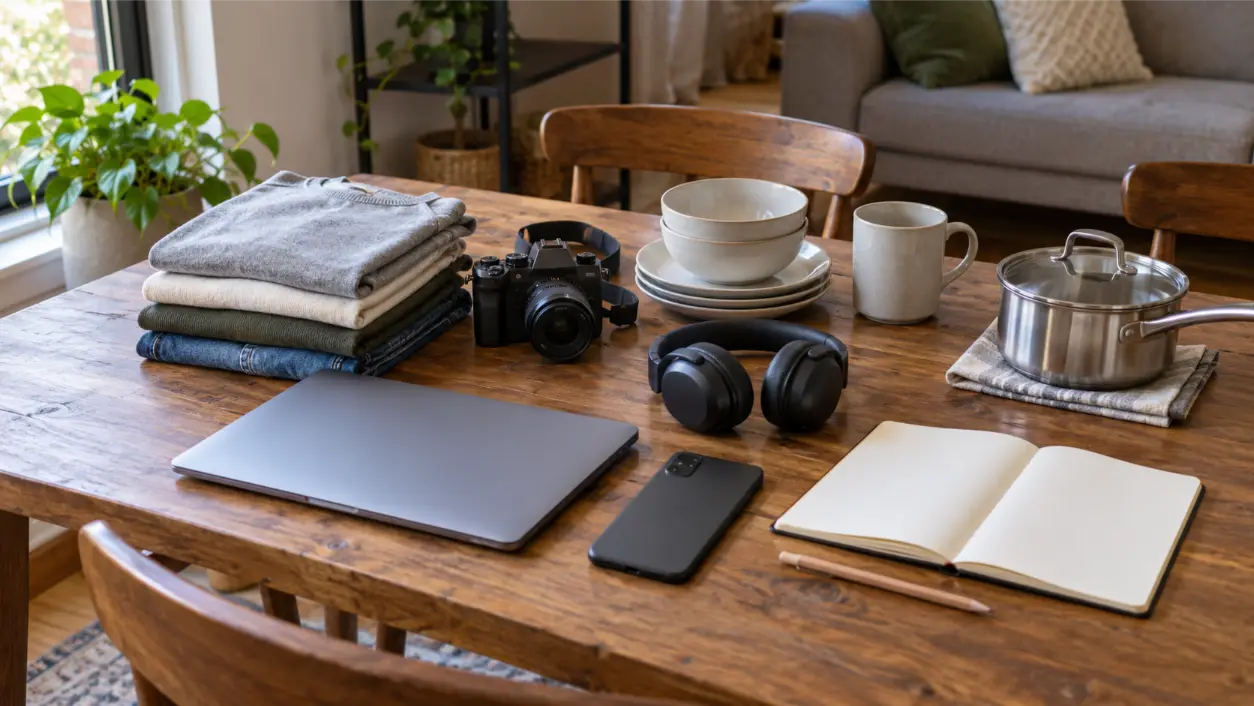
Personal property coverage may pay to repair or replace belongings damaged or stolen because of an event covered by the policy. Many renters policies address perils such as fire, smoke, theft, vandalism, and certain sudden water incidents. The items can include kitchenware, bedding, small appliances, furniture, and electronics, subject to the definitions and limits in the contract. A policy may cover your own belongings even when you do not own expensive furniture: replacing everyday clothing, shoes, cookware, and electronics can add up.
Do not assume that every kind of damage to an item is insured. Whether a loss involves a covered peril matters. A laptop stolen in a covered burglary is different from one that simply stops working after years of use. Check the policy’s covered causes of loss, exclusions, special limits, and valuation method.
2. Personal Liability: Certain Claims From Other People
Liability protection may help when someone alleges that your negligence caused a covered bodily injury or damage to their property. For example, if a visitor suffers an injury and you are legally responsible, the policy may provide coverage for an eligible claim and associated defense costs, up to its limits and subject to exclusions. A visitor getting hurt does not automatically mean the renter or insurer is liable.
Liability insurance is not personal injury health insurance for the policyholder. It also has exclusions, including intentional misconduct and certain business or animal-related exposures. Ask how the policy treats pets, water damage affecting a neighbor, and other situations relevant to your household. The Georgia Office of Insurance and Safety Fire Commissioner identifies liability protection as a common component of home and renters packages.
3. Medical Payments to Others
Many policies include a separate, relatively limited medical-payments-to-others benefit for eligible minor injuries involving guests, sometimes without requiring the same proof of negligence as a liability claim. It is different from bodily injury liability coverage and is not a replacement for your own health insurance. Ask for the exact limit and exclusions, rather than assuming every guest’s medical bill will be paid.
4. Additional Living Expenses or Loss of Use
If a covered incident, such as a qualifying fire, makes your rental temporarily uninhabitable, loss-of-use coverage may help with certain additional costs of living elsewhere. Examples can include the eligible extra cost of a hotel or meals above your normal expenses. Payment depends on the covered cause, the need to relocate, policy limits, duration rules, and documentation. It is not a blanket promise to pay rent elsewhere whenever an apartment becomes inconvenient.
Keep receipts and ask the insurer what expenses need advance approval. When the underlying event is excluded, such as a flood under an ordinary renters policy, the additional living expenses arising from it may also be excluded.
Does Renters Insurance Cover Theft Outside Your Home?
It may. Many renters policies extend some personal property protection away from the residence, so stolen personal belongings from a car, hotel room, or other location may qualify if the cause is covered. The NAIC notes that renters policies can protect possessions outside the home. However, coverage for off-premises property can have lower limits, category sublimits, and other restrictions. A stolen laptop does not mean the car’s broken window or the vehicle itself is covered by renters insurance; vehicle damage generally belongs in the appropriate auto-insurance analysis.
Before relying on this protection, ask specifically about theft from a parked vehicle, storage-unit property, travel, and high-value items. Maintain receipts and photographs where practical, and preserve any police or incident report required by the claim process. This is one area where a quick review with an agent can clarify more than a general online summary.
What Renters Insurance Usually Does Not Cover
Flooding and Some Other Natural Hazards
Standard renters policies generally exclude flood damage, even when heavy rain causes water to enter the rental. Flooding is different from some sudden internal plumbing incidents, which may be covered under the applicable policy. Earthquake damage is also commonly excluded. The official National Flood Insurance Program (NFIP) overview explains that renters may be able to obtain separate contents-only flood protection in participating communities. Do not assume renters insurance from any carrier automatically includes it.
Maintenance, Wear and Tear, and Many Gradual Problems
Insurance is generally designed around specified unexpected losses, not replacing items because they wear out. Routine appliance failure, deterioration over time, and some gradual leaks or mold situations may be excluded or restricted. The cause and timing of water damage matter: a sudden covered pipe incident is not the same as long-term seepage or outside floodwater. Report concerns promptly to your landlord and review the actual coverage wording.
The Structure, Vehicles, and Property Belonging to Others
Renters coverage does not generally insure the building itself, your automobile, or every possession owned by someone living with you. A roommate is not necessarily insured under your policy just because you share a lease or address. Likewise, business equipment, property used commercially, cash, jewelry, and collectibles may face restrictions or special dollar caps. Coverage for an item does not automatically extend to its full market value.
Miles Jackson Insurance has a separate explainer on renters insurance jewelry and electronics limits if you need to understand sublimits or possible scheduled coverage.
How Does a Renters Insurance Deductible Work?
The deductible is the amount you are generally responsible for on a covered property claim before the insurer pays the remaining eligible amount, subject to limits and terms. As a simple hypothetical illustration, if a covered theft produces $2,000 in eligible property loss and your applicable deductible is $500, the calculation may produce a $1,500 payment before considering special limits or valuation adjustments. This is an example, not an estimate of any specific claim.
A $500 loss with a $1,000 property deductible may result in no property payment. A higher deductible can sometimes reduce the premium, but it also increases the amount you may need to pay after a covered loss. Do not assume the same property deductible applies to every part of your contract; liability and medical payments may be structured differently. The declarations page and policy govern.
Actual Cash Value Versus Replacement Cost
The wording on your declarations page can significantly affect a claim. Actual cash value (ACV) commonly takes age and depreciation into account. Replacement cost is generally based on the cost of a comparable new item, subject to policy conditions, limits, and deductibles. The NAIC’s comparison of ACV and replacement-cost coverage explains why the distinction affects out-of-pocket expenses.
Imagine a five-year-old sofa is destroyed by a covered fire. An ACV approach may recognize that it has depreciated; a replacement-cost approach may provide for replacing it with a comparable new sofa, sometimes through a staged claims process requiring proof of replacement. Neither approach guarantees the original purchase price or a brand-new upgrade. Ask what method applies to personal property and whether replacement-cost treatment requires an endorsement.
How Much Renters Coverage Should You Consider?
Start with a realistic home inventory. Walk through each room and count furniture, clothing, electronics, bedding, kitchen items, hobby gear, and possessions kept in closets. Save photographs and receipts where available. Estimate the cost of replacing these belongings and compare the total with the personal property limit. This gives you a stronger foundation than simply buying the minimum amount requested by a landlord.
Then review liability limits according to your household, visitors, pets, and financial circumstances. Check loss-of-use coverage and any special coverage for jewelry, cameras, bicycles, or off-premises storage. Ask whether separate flood protection is worth evaluating based on the building’s exposure. The right amount depends on the chosen insurer, policy, location, and actual belongings; there is no one-size-fits-all limit.
Six-Step Checklist Before You Submit Proof to Your Landlord
- Read the lease: Note the required liability amount, deadline, proof format, and whether a landlord or property manager requests interested-party notification.
- Inventory what you own: Include everyday items as well as electronics and valuables, and estimate their replacement costs.
- Compare the coverage sections: Review personal property, liability, medical payments, and additional living expenses, rather than looking at premium alone.
- Ask about major gaps: Clarify flood, earthquake, accidental damage, pets, roommates, business items, and theft outside your home.
- Check the deductible and valuation: Identify your property deductible and whether belongings have ACV or replacement-cost treatment.
- Confirm issuance: Verify the insured name, address, effective date, limits, and proof-of-insurance document before sending it to your landlord. A quote alone does not activate coverage.
Common Renters Insurance Myths
“The landlord already insured everything.” The landlord’s policy ordinarily covers the building and the landlord’s insurable interests, not a tenant’s belongings. “My belongings are not expensive enough.” Everyday items across an entire apartment can be costly to replace. “Renters insurance covers any water damage.” Flooding and gradual water damage often require separate consideration or are excluded. “If my lease accepts the policy, every possible loss is covered.” Meeting a landlord’s documentation requirement is not the same as having appropriate coverage for your risks.
Frequently Asked Questions
Is Renters Insurance Required by Law in Georgia?
Georgia does not generally impose a statewide renters-insurance mandate on every tenant, but a lease may require coverage as a condition of renting. Review the lease and ask the property manager about exact proof and liability requirements. Legal obligations depend on the particular agreement and applicable law.
Does Renters Insurance Cover Theft From My Car?
Many policies may cover qualifying personal items stolen from a vehicle, subject to deductibles and off-premises limits. Renters insurance generally does not pay for damage to the car itself. Ask the agent about the exact policy before assuming a claim qualifies.
Does Renters Insurance Cover a Burst Pipe or a Flood?
Some sudden, accidental internal water incidents may be covered, but ordinary renters insurance generally excludes flooding. The cause of water entry, policy language, and any separate flood coverage determine the answer.
Does Renters Liability Insurance Pay for Any Guest Injury?
No. Liability coverage depends on applicable legal responsibility and the policy’s terms. Separate medical-payments-to-others coverage may address certain eligible minor injuries, but neither benefit is unlimited.
How Much Is the Renters Insurance Deductible?
It depends on the policy you choose. A deductible is commonly applied to a covered personal-property loss; confirm its amount and how it interacts with loss valuation and coverage limits. A liability claim may be treated differently.
Does My Renters Policy Automatically Cover My Roommate?
Do not assume so. A roommate’s possessions and liability may not be included unless the policy’s definitions or an approved endorsement establish coverage. Confirm who is a named insured and whether separate coverage is needed.
Understand the Coverage Before You Choose a Policy
If a Newnan-area landlord requires renters insurance or you simply want to protect your belongings, a clear comparison is a useful starting point. Miles Jackson Insurance is a local GEICO exclusive agency serving renters in Newnan, Peachtree City, Sharpsburg, Senoia, Fayetteville, and surrounding Georgia communities, with agents licensed in Georgia and Alabama. Review the agency’s renters insurance options or request a free quote to discuss limits, deductibles, exclusions, and any available policy features. Coverage, premiums, optional endorsements, and eligibility depend on the actual insurer and policy; no specific claim outcome is guaranteed.
Disclaimer: This article is general insurance and consumer education, not individualized insurance, financial, or legal advice. Coverage varies by insurer, policy form, state, endorsements, exclusions, limits, deductibles, underwriting decisions, and claim facts. The policy contract and applicable law control. Confirm current requirements and actual terms with a licensed insurance professional before purchasing or relying on coverage.
RELATED LINK: National Association of Insurance Commissioners — Renting Your Home? Protect Your Belongings with Renters Insurance